Public Libraries and the Public Good
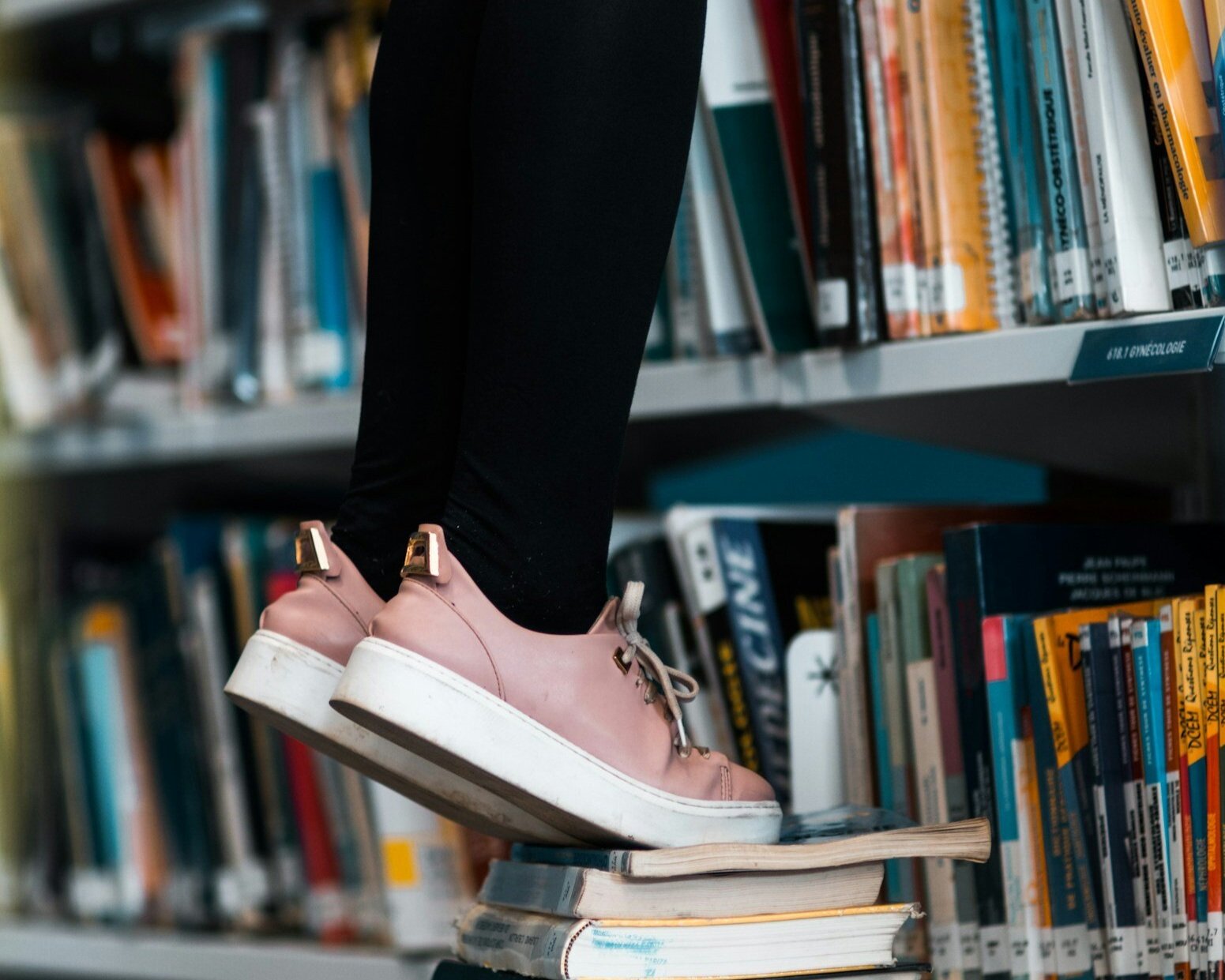
In photo: A person in pink shoes standing to reach toward a public bookshelf
In 1982, just after I graduated from college in Dublin, I left my native County Mayo and found a job a one-room, attic flat in a one-street town in the northern end of the Irish midlands.
When I stepped off that cross-country bus, I didn’t know anybody in that town that was a short(ish) drive to the then-Northern Ireland border.
My apartment house had no front-hallway telephone and, of course, this was way, way before mobiles or the internet.
However, the town's public library was open a few evenings per week, and the librarian and I had almost identical reading tastes. So when certain new books came in, she auto-reserved them for me on a hunch that I would like these titles.
Her hunches were never wrong.
Often, as I chatted across that library circulation desk, the sound of my own voice startled me. Except for those library visits and my stop at the town supermarket, I was completely alone--unless you count the seven and eight-year-old students in the parish school where I taught.
Without a television or a record player, there was much more time for reading. And the longer and denser the library book, the better I liked it.
What I Read Back Then
Now I live three thousand miles away from that town where I tried and failed to launch an adult life.
Nowadays, as I balance a day job with creative writing and teaching, I marvel at what a 20-year-old kid like me managed to read each week. Plus: A little boast here: At least two of those books had been banned in and by the authors’ own countries.
I devoured most of the works of Heinrich Böll, the German post-World War II novelist. I read fat biographies of Maud Gonne and Agatha Christie.
Short story collections. Novellas. Novels galore. I remember how I wept when I read "The Well of Loneliness," a heartbreaking and previously banned love story about an illicit lesbian relationship—a topic and a lifestyle that were illegal in 1980s Ireland. In fact, as I write in this piece at Books Ireland, these books changed my life—and who I would become as a person.
I'm still an avid reader, but these days—at least from a financial and digital-access and -download point of view—I no longer need to borrow hard-cover books.
But I do. Because once a library patron, always a library patron. So here I am. And, as I write this, there’s that library-loan novel sitting on my bedside table.
A Lifelong Library Patron
As well as reading, being a library patron means being part of a real, flesh-and-blood or virtual community.
As a reader and an author, from technology access to research and teaching resources, to take-home print and audio books, I see our public libraries as one of the finest and persistent examples of bonum publicum or public good.
***
Enjoyed this post? Read more about my books, essays and creative and wellness-writing workshops for libraries, universities, hospitals and wellness groups.
Books Ireland: Can Books Convert Us?